
Global warming is altering Europe's flora
The Alps Are Particularly Affected
An international research team, including Austrian researchers, has analyzed changes in the composition of plant communities in Europe under the influence of global warming. The study was published in the international scientific journal “Nature”. Researchers from Austria - including those from the Environment Agency Austria, BOKU, the Austrian Academy of Sciences and the University of Innsbruck - also contributed to the article.
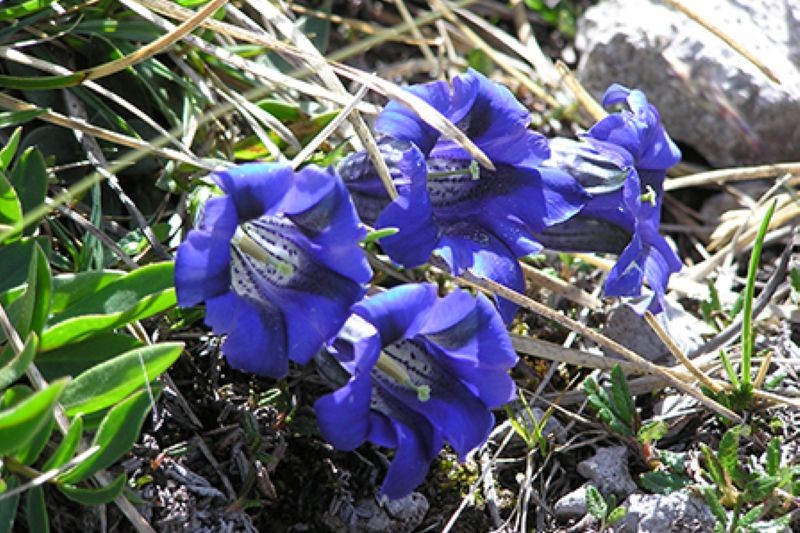
The study shows that Europe's plants are adapting to climate change in different ways. While some plant communities are able to keep pace with rising temperatures relatively well, others are increasingly falling behind. In mountainous regions, particularly in the Alps, a rapid decline in cold-adapted species is being observed. In contrast, more and more heat-adapted plants are growing in forests and meadows.
Global warming is altering the composition of plant communities across Europe. Heat-loving species are becoming increasingly widespread, while cold-tolerant species are being pushed back—a process researchers refer to as “thermophilization.” Yet many ecosystems are reacting slowly to rising temperatures. The actual change in species composition lags behind the climate conditions that have already changed. This situation increases the risk of species extinction.
The results show clear differences between different habitats: Alpine mountain regions exhibit the most significant changes. The main cause is primarily the reduction in cold-loving species.

The results provide a crucial foundation for more accurately predicting future changes in the plant world as global warming keeps going.
Articel in journal “Nature”: Contrasting thermophilization among forests, grasslands and alpine summits | Nature